Why Should You Try Social Nudity?
Explore the idea of social nudity without pressure, labels, or pretending.
Most of us grow up with a simple message about nudity: keep your clothes on around other people. We learn that being naked in public is embarrassing, improper, sexual, or simply strange. By the time we reach adulthood, these ideas can feel so ordinary that we rarely stop to ask whether they reflect our own preferences or are simply the rules we have always known.
That makes it perfectly reasonable to wonder why anyone would choose to be naked around other people. Why take off your clothes at a beach, pool, resort, or gathering when wearing them feels safer and more familiar? Why risk feeling awkward or exposed? What could someone hope to gain from the experience?
This page is not here to pressure you into trying social nudity. It is not asking you to reject clothing, join a club, call yourself a nudist, or prove that you are unusually confident. It is simply an invitation to consider whether social nudity might offer something you would enjoy, value, or learn from.

You Do Not Have to Become a Nudist
Trying social nudity does not require taking on a new identity. You can enjoy swimming naked without doing virtually everything else naked and becoming a nudist. You can enjoy a clothing-optional beach but have no interest in clubs or resorts. You can like being naked outdoors while preferring clothing almost everywhere else.
Trying an experience does not obligate you to build your life around it.
You are allowed to be curious without already knowing what you think. You are also allowed to try it, enjoy some parts of it, dislike others, and decide afterward whether it has any place in your life.

Is It Your Choice—or Just What Feels Normal?
Much of what feels normal is simply what we are used to. Most people wear swimsuits because that is what people wear in the water in public. They may never stop to ask whether the suit actually makes swimming better. After all, almost no one wears clothing in a private shower or bathtub, where it would be plainly dysfunctional. Clothing and water simply don’t mix well. So perhaps the swimsuit is not really there to improve the experience of water. Perhaps it is simply the price our culture requires us to pay for being allowed into the water in public.
That does not make swimsuits bad. Some people enjoy them and appreciate the style, support, privacy, or sense of security they provide. The more interesting question is whether someone is wearing one because they genuinely prefer it or because being without it feels socially impossible.
Trying social nudity gives a person a chance to find out. They may discover that they truly prefer being covered. They may find that the discomfort begins to fade once the setting stops feeling unfamiliar. They may enjoy swimming without clothing but have little interest in the social side. They may also be surprised by how calm and ordinary the experience feels. The point is not to reach the “right” conclusion. It is to have a conclusion based partly on experience rather than entirely on assumptions.
What Are People Looking For?
People become curious about social nudity for many reasons. Some simply want to know what a nude beach or clothing-optional resort is really like. Others are interested in the physical freedom of swimming without wet fabric clinging to them or of feeling sun, air, and water across the whole body. Some are tired of covering, adjusting, comparing, and wondering what other people think about how they look.
A person does not have to be searching for a major transformation. They may simply want a break from treating their body as something that must always be managed. Others see social nudity as a personal challenge. They may have spent years assuming that being seen naked would be unbearable and now wonder whether that fear still deserves so much control over their choices.
Some people are drawn to the outdoors, simple living, unusual experiences, or the chance to do something they have never done before. Some go because a friend or partner invited them. Some simply enjoy being naked and would like to swim, relax, or spend time outdoors without clothing when the setting allows it. Sometimes a person tries social nudity simply because it sounds freeing, interesting, or even a little daring without feeling especially risky.

It May Feel More Ordinary Than You Expect
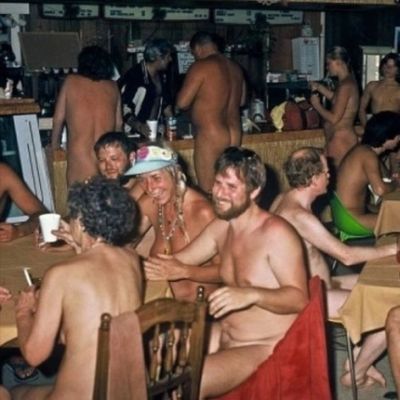
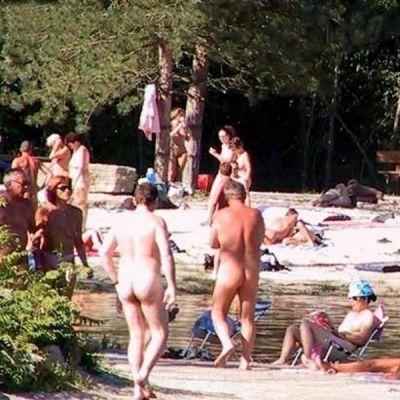
From the outside, a clothing-optional place can sound intensely focused on bodies. A newcomer may imagine everyone looking, comparing, or thinking about nudity all the time. In a respectful setting, however, people soon begin doing the same ordinary things they would do anywhere else. They swim, talk, read, eat, walk, play games, or sit in the shade. After a while, being naked may stop feeling like the main event.
That can be one of the most surprising parts of the experience. Someone may arrive feeling that every inch of their body is on display and later realize that most people are busy enjoying their own day. Social nudity does not erase every insecurity, and people do not suddenly stop noticing appearance. It can, however, show that being seen does not always mean being closely examined or judged.
Real Bodies Look Like Real Bodies
Most of the naked or nearly naked bodies people see in media are carefully chosen. They appear in advertising, movies, fitness content, pornography, fashion, or edited social media posts. These images can quietly teach us that visible bodies are supposed to be unusually young, smooth, thin, muscular, or attractive.
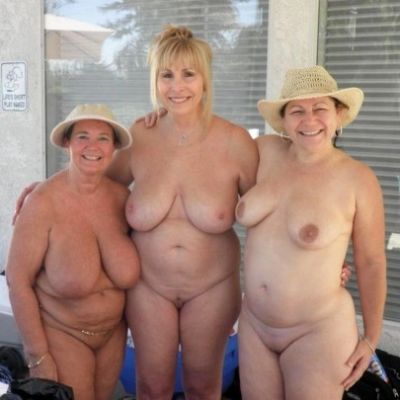
A social nudity setting usually presents a much wider range of human bodies. People have wrinkles, scars, body fat, body hair, loose skin, disabilities, surgery marks, and all the ordinary signs of living. Seeing that variety may not suddenly make someone love every part of their own body. It may do something quieter and more believable: help them realize that their body is not uniquely wrong.
An ordinary body is still allowed to swim, relax, laugh, and belong.
Good Boundaries Still Matter
Social nudity should never mean giving up personal boundaries. A well-run place should have clear rules about photography, touching, sexual behavior, intrusive comments, staring, and unwanted attention. Nobody should be pressured to undress before they are ready, and a visitor should always be free to use a towel, robe, or clothing, cover up again, or leave.
Nudity is not permission to touch, photograph, pursue, or make personal comments about another person. This is one of the central ideas behind Reclaim Body Comfort: a body is not bad behavior. What matters is how people act.
Clothing does not automatically make someone respectful, just as nudity does not automatically make someone inappropriate. Respect comes from consent, boundaries, and ordinary human decency.
What If You Feel Uncomfortable?
A first-time visitor may feel uncomfortable, and that discomfort should not be mocked or brushed aside. It also does not necessarily mean that anything harmful is happening. Sometimes discomfort warns us that a person or place is unsafe. Sometimes it comes from doing something unfamiliar. Sometimes it is simply the feeling of stepping outside a rule we have followed for most of our lives.
A good first experience allows enough time and freedom to notice the difference. Does the nervousness begin to fade? Does the setting feel safe even though it still feels awkward? Is the problem the nudity itself, or is it the way a particular person is behaving? Does the swimming feel enjoyable even if the social setting does not?
Paying attention to those reactions is part of making an informed decision. Stepping outside a comfort zone does not mean ignoring your judgment or forcing yourself to remain somewhere that feels wrong.

You May Simply Enjoy It
There is also a very simple reason some people try social nudity: being naked can feel good. Swimming without a suit can feel smoother and less restricted. There is no wet fabric to cling, sag, tighten, or require adjustment. Air, sun, and water reach the whole body.
Some people find that deeply enjoyable. Others barely notice much difference, and some do not like it at all. No article can tell you exactly how it will feel to you, which is one reason people decide to try it for themselves.

You May Decide It Is Not for You
An honest invitation must also leave room for someone to decide that social nudity is not for them. A person may dislike the venue, the people, the lack of privacy, or the experience itself. They may enjoy being naked alone but not around others. They may find nude swimming pleasant but not important enough to seek out again.
That is a reasonable result. Trying something does not create an obligation to repeat it. Even when a person decides not to continue, the experience may still help them understand themselves more clearly and understand why others enjoy social nudity without seeing them as strange or reckless.
Choosing a Good First Experience
Anyone who is curious should choose the setting carefully. A good place will clearly welcome first-time visitors and explain its rules before they arrive. It should answer direct questions about photography, privacy, expected behavior, clothing options, and what happens if someone crosses a boundary.
Going with someone you trust may make the experience easier. It can also help to choose a setting built around an activity you already enjoy, such as swimming, reading, walking, relaxing outdoors, or visiting a spa. When there is something pleasant to do, it becomes easier to stop thinking of yourself as being on display.
There should be no reason to rush. You can stay covered while you become familiar with the place. You can take one step at a time, cover up again, or change your mind. A respectful setting will not treat hesitation as a problem.

So Why Try Naked?
Not because everyone should, and not because clothing is bad. You do not need to prove that you are brave, open-minded, or completely comfortable with your body.
You might try it because you are curious. You might like the idea of swimming without a suit. You may want a break from worrying about how you look, or you may wonder whether a rule you have followed all your life still makes sense for you.
You may discover that the experience feels peaceful, freeing, ordinary, or simply interesting. You may also decide that it is not for you. Either way, you will know more than you did before.
You do not have to become anything. You are simply allowed to wonder what you might discover if you tried.

Memes to share: