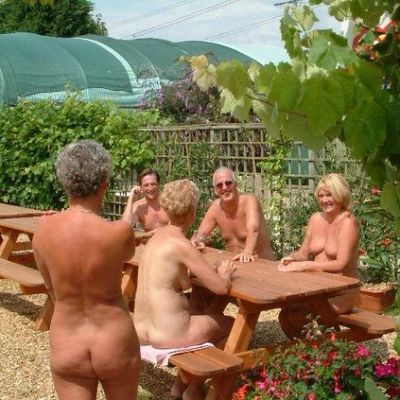
Greater Ease
Body discomfort turns ordinary moments into examinations.
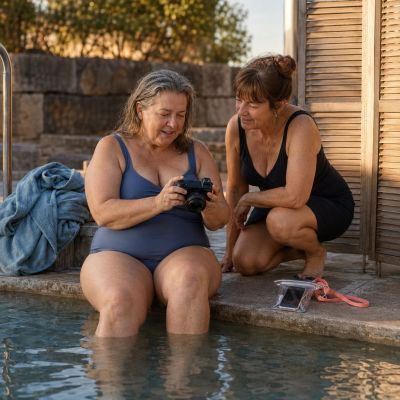
Swimming becomes an evaluation of the stomach. A photograph becomes a search for defects. Getting dressed becomes a negotiation with everything we hope other people will not notice. Aging becomes a record of losses, and physical affection can be interrupted by watching ourselves from the outside.
Greater ease does not mean those thoughts never return. It means they no longer require constant attention.
We may still have insecurities without organizing our lives around them. We may notice a scar, a change in weight, an aging face, a disability, or a feature we have never liked—and still remain present for the water, conversation, examination, photograph, movement, or affection happening around us.
Body comfort allows the body to become less of a performance and more of a place from which to live.
That shift may be quiet. It might mean going swimming without spending the afternoon thinking about appearance. Letting someone take a photograph without immediately deleting it. Receiving medical care without feeling that being examined is a personal failure. Feeling sunlight, water, air, movement, or another person’s embrace without monitoring the body from an imagined audience’s viewpoint.
Ease is not the absence of every uncomfortable thought. It is the recovery of attention those thoughts once consumed.
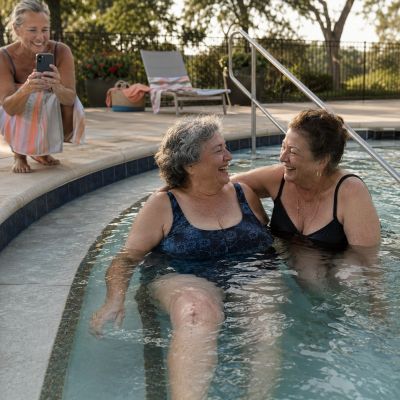
More Meaningful Choice
A choice is not fully free merely because no one is physically forcing us.
Our decisions can also be shaped by anticipated ridicule, learned shame, economic pressure, family expectations, religious or cultural teaching, trauma, fear of sexualization, and the belief that certain alternatives are literally unthinkable.
Examining those influences does not invalidate the choice that remains.
A person may examine the beliefs surrounding modesty and still choose extensive covering. Someone may question compulsory concealment and continue to value privacy. Another person may become more comfortable with social nudity. Someone else may want greater freedom only in healthcare, at home, in art, or while swimming.
Reclaiming body comfort does not prescribe the correct amount of clothing, visibility, modesty, or exposure.
It creates room to ask:
- What do I actually prefer?
- What practical purpose does this boundary serve?
- What judgment am I expecting?
- Would I choose differently if ridicule or sexualization were removed?
- Does this choice help me live according to my values?
- Is it protecting my privacy—or protecting me from shame I was taught to anticipate?
A boundary can remain protected while the beliefs that shaped it are examined. Inquiry is not coercion, and reconsideration does not obligate change.
The goal is not to replace compulsory concealment with compulsory exposure. It is to make greater room for informed, self-directed choice.
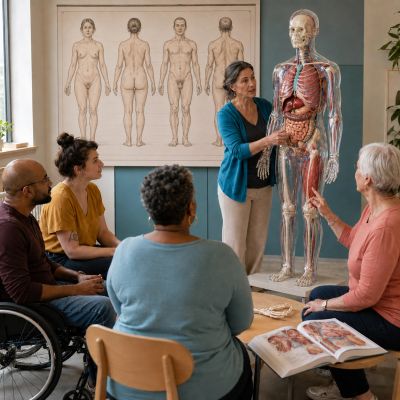
Truthful Body Knowledge
The human body is not an exotic object.
Its basic anatomy, functions, development, variation, aging, and vulnerability are part of ordinary human existence. Yet many people grow up with incomplete knowledge, euphemisms, warnings, distorted media images, and long silences surrounding some of the most basic parts of themselves.
Truthful body knowledge replaces mystery with understanding.
It means learning accurate anatomical language without treating the words as obscene. It means understanding puberty without presenting development as contamination, aging without treating change as defeat, and disability without assuming that a different body is a failed one.
It also means recognizing the extraordinary range of ordinary human variation. Real bodies have folds, hair, scars, asymmetry, softness, muscle, wrinkles, stretch marks, mobility differences, surgical changes, birthmarks, and features that do not fit simplified categories.
Accurate knowledge does not eliminate privacy. We can understand a body part without granting everyone access to it. We can speak its name while maintaining boundaries around who may see or touch it.
Knowledge can make those boundaries clearer because it allows us to identify what is happening, ask informed questions, describe symptoms, express consent, and report violations without first fighting through the belief that the anatomy itself is unspeakable.
A body can be private without being shameful, visible without being sexual, and ordinary without needing correction.
Fuller Participation
Many people postpone living until their bodies meet a condition.
They will swim after losing weight. Dance after becoming fitter. appear in photographs after fixing their teeth. Date after gaining confidence. Wear the clothes they enjoy after becoming the shape those clothes supposedly require.
Sometimes desired changes are possible and worthwhile. Sometimes they are medically necessary. Sometimes they remain unaffordable, inaccessible, or impossible.
Life continues while we wait.
Reclaiming body comfort does not mean giving up on change. It means questioning whether participation must remain withheld until the change occurs.
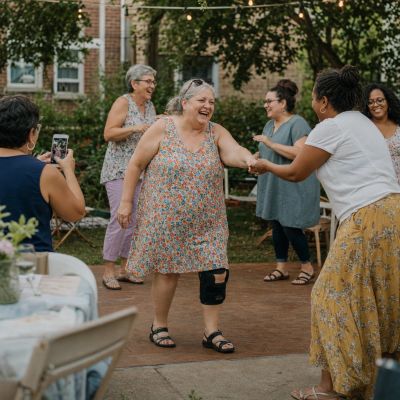
An ordinary body does not have to earn the right to enter the water, receive affection, be remembered in family photographs, seek medical care, enjoy clothing, take up space, or appear in public.
Participation also does not need to look dramatic. It may mean:
- returning to an activity quietly abandoned;
- allowing ourselves to remain in the photograph;
- asking a healthcare professional the question we were embarrassed to say aloud;
- wearing something because it feels good rather than because it conceals effectively;
- accepting an invitation without first evaluating how our body will appear;
- trying movement for pleasure rather than punishment;
- letting aging add history without subtracting human worth.
Not every avoided experience needs to be reclaimed. The important ones are those we still value but have surrendered primarily to fear and judgment.
Clearer Consent and Stronger Privacy
Body comfort and privacy are not opposites.
In fact, separating anatomy from shame can make consent more precise. Instead of treating certain bodies as automatically sexual or harmful, we can focus on what people actually choose, permit, and do.
Consent to be seen is not consent to be touched. Consent to be photographed is not consent to publication. Consent in one relationship or setting does not transfer to another. Clothing does not establish consent, and nakedness does not erase the need for it.
Meaningful privacy is not a declaration that the body is disgraceful. It is authority over access.
That authority includes deciding:
- when and where we are seen;
- who may photograph or record us;
- how an image may be used;
- what touch we welcome;
- what medical care we authorize;
- what information we share;
- and when consent ends.
When society treats anatomy itself as the danger, it can lose sight of the conduct that causes harm. Reclaiming body comfort brings responsibility back into focus: the person who coerces, exploits, records, distributes, threatens, deceives, or violates a boundary is responsible for that conduct.
The body of the person harmed is not the source of the wrongdoing.
Kinder Relationships With Ourselves
Many of us speak to our bodies in a language we would never use toward someone we love.
We accuse them of betrayal when they age, weakness when they need rest, failure when they change, and indecency when they become visible. We demand that they look acceptable while carrying us through illness, work, pleasure, grief, movement, touch, healing, and ordinary days.
A kinder relationship does not require admiration for every feature.
It may begin with something more honest:
This is my body as it exists today.
It has needs I can listen to.
Its appearance does not reveal my character.
I do not have to punish it for failing to resemble an ideal.
I can pursue health without making worth conditional on the outcome.
Kindness may mean seeking treatment, making a change, accommodating a limitation, setting a boundary, resting, moving, eating, grieving, or asking for help. Acceptance should never become an excuse for denying people affordable healthcare, accessibility, pain relief, or changes they genuinely want.
The difference is whether care begins from hostility or from recognition that the body receiving care already belongs.
Kinder Relationships With Other People
Body hierarchies do not affect only how we see ourselves. They influence whom we admire, mock, desire, avoid, trust, employ, photograph, include, and take seriously.
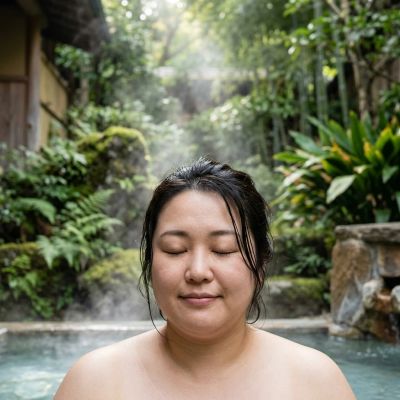
Greater body comfort can help us meet other people with less automatic ranking.
We can notice a body without turning it into a verdict. We can acknowledge difference without treating it as deficiency. We can encounter anatomy without assuming sexual intent. We can respect another person’s privacy without reinforcing the belief that what they conceal is shameful.
This does not require pretending appearance never matters to us. Attraction, aesthetic preference, culture, and personal taste remain real. But preference does not have to become a hierarchy of human value.
A body can be unfamiliar to us without being a problem. Another person’s comfort does not require our imitation, and our discomfort does not automatically establish their wrongdoing.
Body comfort gives us a chance to relate to people as inhabitants of bodies—not as bodies awaiting our approval.
What Would You Like to Reclaim?
Reclaiming body comfort will mean different things to different people.
- Perhaps you want to swim again.
- Be present in photographs.
- Seek healthcare without humiliation.
- Age without interpreting every change as defeat.
- Stop measuring worth against perfected images.
- Use accurate words for your own anatomy.
- Feel less responsible for other people’s thoughts.
- Separate privacy from shame.
- Experience movement as pleasure rather than correction.
- Feel sunlight, water, air, affection, and physical presence without constantly watching yourself from the outside.
Or perhaps you simply want to understand where your discomfort came from before deciding what—if anything—you wish to change.
There is no required destination and no test of body acceptance to pass.
Reclaiming begins when inherited judgments lose their automatic authority and become open to examination.
It continues whenever we recover a choice, a truth, an experience, a conversation, or a part of life that shame had quietly taken from us.
We do not have to become fearless, perfectly confident, or comfortable everywhere. We can begin by asking what might become possible if our bodies no longer had to earn the right to belong.
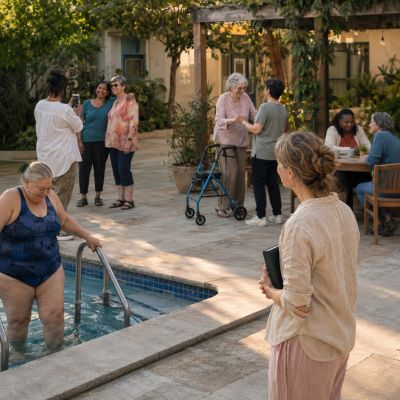
What Naturist Experience Can Teach Us
For more than a century, social nudists and naturists have cultivated—and demonstrated—the possibility of greater comfort in ordinary human bodies, even as mainstream Western culture has often made that comfort difficult to sustain.
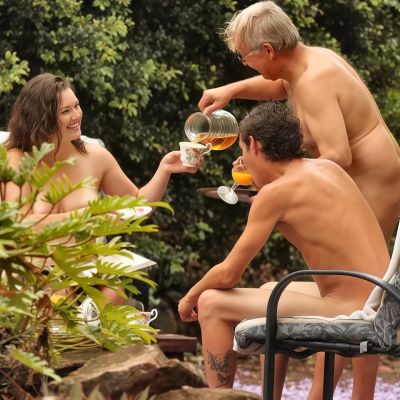
In respectful, nonsexual settings where ordinary bodies are visible, people encounter a much broader range of human variation than commercial media usually provides. Bodies of different ages, sizes, shapes, abilities, and histories are present without being arranged into a competition or presented primarily for sexual attention.
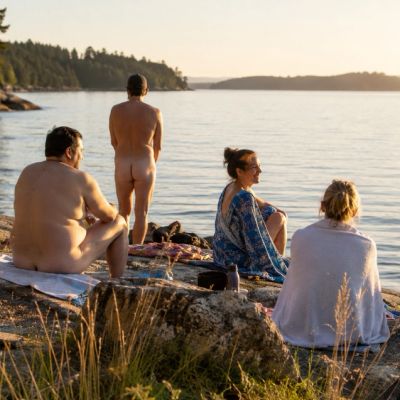
For many participants, the initial self-consciousness diminishes surprisingly quickly. Once everyone is unclothed, clothing can no longer perform its usual work of signaling status, concealing perceived flaws, or separating acceptable bodies from unacceptable ones. The body may become less of a performance and more simply part of the person who is swimming, talking, resting, gardening, playing a game, or enjoying the day.
Research supports some of what naturists have long reported. Participation in naturist activities has been associated with more positive body image, greater self-esteem, and higher life satisfaction. Studies conducted at actual naturist events also found improvements in body appreciation and well-being after participation, although the research base remains limited and does not establish that everyone will respond in the same way. Research on naturism, body image, self-esteem, and life satisfaction
Later research found that communal naked activity was associated with greater body appreciation partly because participants felt less anxiety about how others were evaluating their appearance. Research on communal naked activity and body appreciation A larger study likewise found a positive relationship between naturist activity and body appreciation, mediated by lower social-physique anxiety. Research on naturism and social-physique anxiety
These findings should not be exaggerated. People who are already relatively comfortable with their bodies may be more willing to try naturism, although studies have attempted to examine that possibility. Naturist settings also vary, and no activity guarantees acceptance, safety, confidence, or belonging.
Even so, social nudity provides a valuable challenge to the assumption that seeing more ordinary bodies must produce more comparison, sexualization, or shame. In supportive contexts, the opposite may happen: repeated exposure to real human variation can make appearance less exceptional and reduce the imagined scrutiny surrounding one’s own body.
Naturism does not ask people to stop having bodies. It creates situations in which they may be able to stop treating their bodies as constant public examinations.
You do not have to become a nudist or naturist to reclaim body comfort.
The broader lessons can matter in healthcare, changing rooms, relationships, art, family communication, aging, disability, photographs, and daily life. Ordinary anatomy can become less shocking. Body variation can become more truthful. Privacy can remain a choice without functioning as proof that the concealed body is shameful.
At the same time, naturism itself remains widely misunderstood. It is frequently confused with exhibitionism, sexual activity, voyeurism, or an absence of boundaries. Naturists may conceal this part of their lives because they fear ridicule, professional consequences, family conflict, or being treated as unsafe or morally suspect. Qualitative research has found that naturists report substantial perceived stigma and often keep their naturist identity behind closed doors. Research on naturists’ experience of stigma
This creates a painful contradiction. A person may experience unusual ease, equality, and body acceptance inside a naturist setting, then return to a wider culture that interprets the same experience through suspicion and automatic sexualization. The freedom exists—but only within carefully bounded spaces, often accompanied by secrecy outside them.
Healthier social attitudes toward the body would therefore benefit more than people who want to practice social nudity. They could also allow naturists to experience their own lives more openly, safely, and fully—without having a nonsexual source of community and well-being treated as evidence of sexual intent.
Naturists do not possess every answer to body discomfort. But their experience offers something society should not dismiss merely because nudity remains stigmatized:
When ordinary bodies can be seen without being ranked, sexualized, or treated as violations, people may discover that much of the discomfort they expected belonged not to the body itself, but to the meanings surrounding it.