Next Steps

DISARMING THE SCANDAL: The Urgent Case for Public Nudity Acceptance
Let’s stop pretending that our obsession with hiding the unclothed body is a victimless cultural habit. It isn't. It is a slow, daily drain on human dignity, and it is costing us dearly.
Every day, millions of people wake up and put on a heavy, invisible suit of armor before stepping out their front door. We check our angles, adjust our waistbands, worry about phone cameras at public pools, and teach our children—without ever saying a word—that their living, breathing bodies are dangerous secrets that must be contained, compressed, and hidden at all costs.
We tell ourselves we can just "live and let live." We tell ourselves that as long as we can lock our bathroom doors, air-dry in private, or slip away once a year to an isolated, fenced-off beach, we have all the freedom we need.
That is a lie we tell ourselves to avoid the inconvenience of standing up.
Retreating to private sanctuaries does nothing to stop the relentless machine outside the gates. While we hide, a multi-billion-dollar beauty and apparel industry profits off our self-hatred. While we keep quiet, digital predators, AI deepfakes, and online trolls weaponize human anatomy—holding people's lives and reputations hostage to rigid moral dogma and artificial shame. Why? Because our culture has turned the human body into a loaded gun.
The scandal doesn't belong to the body; it belongs to the taboo. As long as we allow ourselves to be held hostage by moral dogma, we agree that being nude is a shameful secret—handing every bad actor with a smartphone absolute leverage over our lives.
We don't need to normalize public nudity just so we can swim without wet fabric. We need to normalize public nudity because artificial shame is a tool of fear and control, and we are done consenting to it.
Staying silent isn't keeping the peace. It is surrendering the public square to a culture of fear. Stepping out isn't a quirky lifestyle choice—it is an act of cultural self-defense, a reclamation of basic human dignity, and the only way to build a world where we and our children can exist without apology.
We don't need to leap off a cliff to cross that gap. We just need a few small, quiet doors to walk through at our own pace. Here is how we move from just thinking about this perspective to quietly, powerfully living it—starting right where we are today.
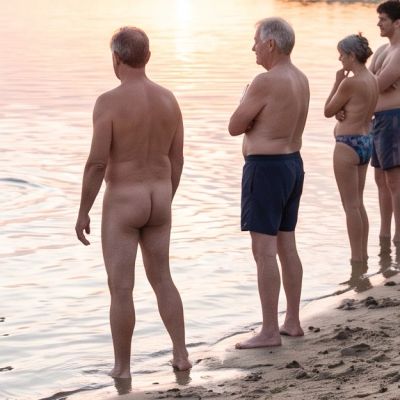
Step 1: Reclaim Your Safe Space (De-programming the Home Habit)
Before we can ever feel grounded in the wider world, we have to stop treating being nude like an emergency in our own homes.
For generations, many of us have been conditioned to reach for a towel or a robe the exact second the shower door opens—as if being seen even by our own eyes or sitting unclothed in a private room is somehow a risk. This habit isn't just about modesty; it is subtle conditioning that trains our nervous system to treat our natural state as something dangerous.
- Drop the rush: After a shower or bath, don't hurry to cover up immediately. Let yourself air-dry while you make a cup of coffee, read a chapter of a book, or sit on the couch. Just be unclothed for a while in your own space.
- Focus on sensation, not sight: Step away from the mirror and stop evaluating how you look. Instead, pay attention to how the air feels against you. Notice the lightness of walking around without elastic waistbands or heavy layers weighing you down. Notice the simple, unearned relief of letting your body breathe.
When we let being unclothed become a boring, ordinary part of our daily home routine, we begin the quiet work of unlearning a lifetime of artificial anxiety.

The Ripple Effect: Why Your Quiet Courage Matters
When one person decides to stop treating their body like a secret, it does something quiet and revolutionary to everyone around them.
Cultural norms are not set by law; they are set by observed permission. When we spend our lives shrinking, adjusting our clothes, and double-checking our reflection, we pass that silent tension down to the next generation. We tell them without words: Watch out. You are on display. You are not safe as you are.
But when you walk through the world with a settled, quiet ease—when you refuse to participate in body gossip, when you speak plainly about the absurdity of swimsuit friction, when you stand up for the basic truth that being naked is completely normal—you drop an anchor for everyone in the room.
You give the teenager struggling with image issues permission to breathe. You give the aging neighbor permission to stop hiding. You turn an intense, high-stakes taboo into something plain, ordinary, and safe.
That is how culture shifts. Not by waiting for permission from the top down, but by ordinary neighbors deciding, one by one, that they are done carrying the heavy weight of artificial shame.

Step 2: Break the Silence (Digital Megaphones & Side-Door Conversations)
One of the heaviest parts of modern body shame is the artificial silence around it. Millions of people already agree in private, but almost nobody talks about it because everyone assumes they are the only one.
You are not the only one. Breaking this silence requires using every tool available to spark the conversation—both online and in person.
Harness the Digital Net (Memes, Articles, & Videos)
Before people ever talk in person, they scroll. Digital content breaks through modern fog fast.
- Share Memes & Visual Shorthand: A smart graphic or meme cuts through defenses with wit and logic. It lets someone nod and share without having to write an essay. When people see a meme getting likes and shares, it signals that an idea is gaining ground.
- Post & Text Deep Articles: When someone expresses burnout over AI cameras, swimsuit friction, or body anxiety, don't argue—text them a link or drop an article in a chat. Let well-crafted pieces do the heavy lifting of explaining the perspective.
Ground It in Side-Door Conversations
Use real-world friction to open easy, grounded doors in casual conversation:
- Bring up the digital reality: The next time a friend or coworker mentions AI deepfakes, online privacy, or the anxiety of phone cameras at public pools, use it as a bridge:
"It’s wild how people use photos to bully others now. But it really makes you think—the only reason those threats work is because our culture treats a naked body like a scandal. If we just treated nudity as ordinary, those online trolls wouldn't have any leverage over us."
- Talk about basic physical comfort: Mention the sheer impracticality of modern swimwear on a hot day:
"Isn't it strange how we've just accepted that wet, heavy fabric clinging to us for hours after a swim is normal? Water and clothes just don’t mix."

Step 3: Unfold a Table (Planting a Flag in Broad Daylight)
Once you've tested the waters in private conversations and digital sharing, the next logical step is to drop a quiet anchor in your local community. Setting up a simple table in a public space—at a market, on a sidewalk, or during a local event—is the fastest way to find the people in your town who already agree with you.
You don’t need to wait for a city council or a social media algorithm to give you permission. Showing up in person is a win on day one.
Why Setting Up a Table Wins Immediately
- It Replaces Isolation with Shared Truth: Rules that treat nudity as a problem survive simply because nobody openly questions them. A table with a bold, clear message such as "Normalize the Normal" a t-shirt that says something like “Shame Proof” drops an anchor in the middle of everyday life. Even for neighbors who just walk past, seeing that setup tells them: You aren't alone in thinking this way.
- It Welcomes People at Their Own Pace: An online debate usually turns into an argument, but a fixed, neighborly table lets people approach on their own terms. They can stop for a ten-second QR code scan, pick up a quick card, or stay for a genuine five-minute conversation about body shame and digital privacy.
- It Normalizes the Conversation in Broad Daylight: By occupying a small square of public space, you move these topics out of shadowy online corners and drop them squarely into the real world. You prove that accepting nudity isn't a radical idea—it's just ordinary human presence.
What Are People Signing? (The Declaration Sheet)
Even if you aren't lobbying city hall for a legal ordinance change, keeping a clipboard on your table gives your neighbors a way to move from passive agreement to active agency. Printed at the top of your sheet, a simple Declaration of Public Dignity defines exactly what they are standing for:
The Public Body Dignity Declaration
We, the undersigned neighbors, agree that:
- Human Bodies Are Not Scandals: Natural human anatomy is ordinary and unremarkable. Treating nudity as an inherent taboo creates unnecessary shame and anxiety for adults and children alike.
- Body Taboo Empowers Cyberbullying: Digital threats, non-consensual photos, and AI deepfakes derive all their leverage from cultural body shame. Normalizing the human body disarms digital predators and strips online trolls of their power.
- Public Spaces Should Honor Dignity: We support safe, peaceful public spaces—including local beaches and parks—where people can enjoy nude recreation without judgment, harassment, or artificial stigma.
By signing below, I stand as a visible ally for body autonomy, digital safety, and normal human dignity in our community.
Every name and email collected on that declaration becomes tangible proof that real citizens care—and creates the direct mailing list you need to invite local allies to your step-four salons.

Step 4: Spark Local Dialogue (Clothed Salons & Private Gatherings)
The contacts and signatures you collect at a public table become the foundation for your local community. Now you have a list of people who care. Step four is bringing those people together off the noisy street and into a quiet space where deeper trust can form.
- Host a body dignity salon: Invite the people you've met at your table, along with interested friends and neighbors, to a casual gathering at a local coffee shop, bookstore, library room, or back patio. Pick a single topic to explore together: How do we defang online imagery? How does constant digital surveillance affect our children's body confidence? Why have we made nudity a taboo?
- Focus on shared human questions: You don't need to lead a lecture or act like an expert. Simply open the floor to honest reflection. When people are given a safe, grounded space to voice their exhaustion with digital exposure and physical judgment, the relief in the room is palpable.
- Gather at home: As trust grows within your local salon group, invite interested peers to host or attend private, clothes-free gatherings in a secure home setting—especially around a backyard pool or quiet deck. Experiencing shared comfort among trusted friends breaks the illusion that we are isolated.
These public dialogues and private gatherings transform the broad attention from your tabling into a tight-knit, mutually supportive community.

Step 5: Wear & Display the Message (Physical Beacons & Established Resources)
Cultural attitudes don't just change through speeches and meetings; they change through what people see in their daily environments. Physical objects act as quiet beacons, signaling solidarity and bringing the conversation into everyday life.
The Power of Tangible Merchandise
Carrying or displaying thoughtful items transforms passive agreement into an active, everyday presence:
- Wearable Beacons (T-Shirts & Tote Bags): A clean shirt or tote with a thought-provoking message acts as a walking billboard. It invites curious, like-minded people to ask questions, putting the invitation on them to open a conversation.
- Everyday Objects (Mugs, Water Bottles, & Towels): A mug on an office desk, a poster in a window, or a towel spread out on a beach drops a quiet anchor. It normalizes the message through calm, repeated visibility.
- Printable Flyers & Stickers: Keeping a few simple flyers or cards in your bag gives you something tangible to hand to someone who leans in at a table or salon.
.png/:/rs=w:400,cg:true,m)
Step 6: Honor and Use Existing Resources
As we work toward this vision, we stand on the shoulders of organizations and communities that have spent decades protecting human dignity and preserving spaces for social nudity. Groups like the American Association for Nude Recreation (AANR) and long-standing landed clubs and non-landed groups have done vital, foundational work. They created safe, highly respectful sanctuaries where families and individuals could experience body acceptance long before the digital age arrived.
Online platforms and forums also offer wonderful spaces to read personal stories and ask questions as you explore:
Visiting an established club or participating in these forums is a fantastic, transformative step for many people. Experiencing a space where non-sexual social nudity is the quiet, settled norm reshapes your brain's default settings. It proves that body shame was never real—it was just cultural baggage.

Bridging the Gap: Why Sanctuary Must Become Public Reality
Established clubs and organizations are vital allies, providing safe havens where we can catch our breath, unlearn shame, and remember what natural comfort feels like. But the world outside those gates has changed dramatically.
We are living through an unprecedented shift. With smartphones in every pocket, public cameras on every corner, photos uploaded without consent, and artificial intelligence capable of manufacturing realistic synthetic images out of thin air, our relationship with our own bodies has reached a crisis point. The fear of being exposed, judged, or weaponized online has turned everyday public life into a high-anxiety stage.

This modern friction is precisely why keeping social nudity safely tucked behind gates is no longer
Threats like digital deepfakes and non-consensual imagery derive all their destructive power from a single cultural vulnerability: the taboo of the nude human body. As long as our culture treats being unclothed as a scandalous secret, bad actors will hold absolute leverage over us.
The only way to permanently disarm that threat—to render digital trolls and non-consensual photos completely powerless—is to bring nudity out into the light of ordinary daily public life. When the nude human body is recognized as normal, ordinary, and unremarkable, the scandal vanishes, and the leverage evaporates.
Established clubs are the foundation and the stepping stones. They show us what is possible in private. Our task now is to take that quiet confidence and bring it out into the public square, transforming safe sanctuaries into a safer, more dignified world for everyone.