
Every Human Life Is Lived Through a Body
Most people are taught thousands of things about the human body long before they are old enough to question them. They learn which parts may be seen, which parts must be hidden, which bodies are considered attractive, when nakedness is acceptable, and when it is treated as embarrassing, indecent, sexual, or unsafe. Very few people are encouraged to ask where those assumptions came from or whether they are helpful or perhaps even harmful.
Reclaim Body Comfort exists to ask those questions.
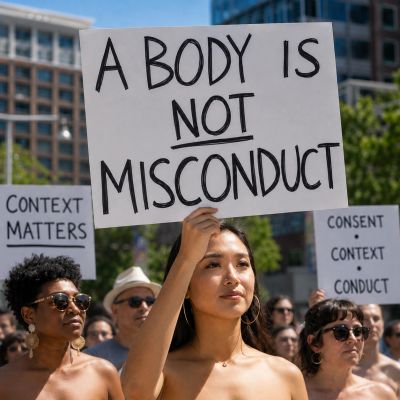
This site is an extension of Acceptance By Design that begins from a simple principle: a human body is not evidence of misconduct, it’s just anatomy. Harm should be evaluated according to circumstance, including consent, coercion, intent, context, exploitation, harassment, privacy, photography, and distribution. Anatomy alone cannot answer those questions.
Reclaim Body Comfort is not neutral about human dignity. It takes the position that basic, common human anatomy is harmfully burdened with exaggerated meanings and confused with harmful behavior. That confusion affects how people experience their own bodies, how institutions create rules, how technology platforms moderate images, and how society responds to privacy, sexuality, education, healthcare, abuse, and consent.

This Is About More Than Nudity
Nudity brings cultural assumptions about the body into unusually sharp focus. A face may appear almost anywhere without explanation, while other parts of the same person can cause an image to be rejected, a social-media account to be restricted, a film to receive a harsher rating, or an ordinary person to be treated as though their anatomy were itself dangerous.
Context is important. Nudity can be used as part of harassment, coercion, intimidation, sexual conduct, or exploitation, and those harms must be taken seriously. It can also appear in ordinary situations such as bathing, changing, sleeping, swimming, healthcare, childbirth, breastfeeding, art, education, relaxation, recreation, cultural practice, documentary work, and private domestic life.
The absence of clothing does not tell us which kind of situation we are seeing. Context, conduct, consent, and purpose do.
Reclaim Body Comfort asks whether society would become safer, fairer, and more humane if it learned to make those distinctions more accurately.
Human beings also appear to be unique in treating their own natural, uncovered state as a category requiring moral explanation. Other animals may protect vulnerable parts of their bodies, respond to mating signals, or avoid unwanted attention, but they do not cover themselves and then classify the uncovered body as indecent or unsafe. Nudity, in this specifically human sense, exists only because clothing has become the expected condition.
Human beings create many customs that have no direct equivalent elsewhere in nature. But it does raise an important question: if the human body is the ordinary biological condition of every person, why has its visibility acquired such extraordinary moral and emotional weight?
The answer cannot simply be that uncovered anatomy is naturally dangerous. Whatever useful purposes clothing and privacy may serve, the belief that the visible body is itself offensive or harmful is a cultural interpretation, not a biological fact.
Privacy Is Not the Issue
Privacy matters. Every person should have meaningful control over who touches their body, photographs it, records it, alters its image, or distributes that image to other people. People may also prefer clothing, modesty, or personal privacy for many reasons, and those preferences do not prove shame, ignorance, or psychological injury.
Reclaim Body Comfort does not ask anyone to become nude, enjoy nudity, or surrender personal boundaries. The issue is not whether people should have privacy. The issue is whether privacy must depend on treating some parts of human anatomy as disgraceful, offensive, or inherently unsafe.
A diary can be private without being shameful. A medical conversation can be private without being indecent. Anatomy can be personal without being treated as a threat.
Privacy means that people should have meaningful control over access to their bodies and images. Shame means that there is something wrong with the body if it is seen. Those are not the same idea.

What Reclaim Body Comfort Is Trying to Change
Reclaim Body Comfort is not trying to create a compulsory culture in which everyone relates to nudity in the same way. Its goal is to reduce the exaggerated, harmful cultural meaning attached to nakedness.
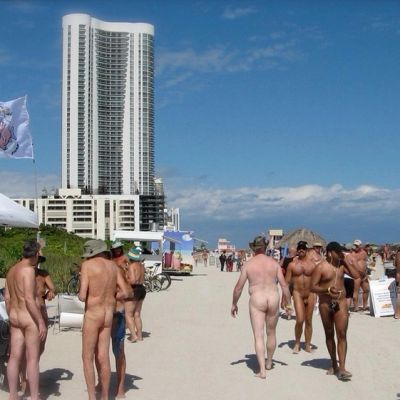
That means reducing the automatic sexualization of the body. A naked body may appear in a sexual context, but nakedness is not itself a sexual act. Human beings also bathe, change, swim, sleep, receive care, give birth, create art, and simply enjoy nakedness.
For many people, being naked is enjoyable for reasons that have little or nothing to do with sex. Clothing can bind, compress, trap heat, restrict movement, chafe the skin, and create a constant awareness of seams, waistbands, straps, elastic, and fabric. Without those pressures, the body can feel cooler, lighter, less confined, and more at ease. Water, air, sunlight, bedding, and movement are experienced directly rather than through an intervening layer of material.
There can also be a psychological dimension. Removing clothing may reduce the sense that the body must always be managed, corrected, presented, or concealed. In a safe and appropriate setting, nakedness can feel restful because there is nothing to adjust, coordinate, or perform. The enjoyment comes not from displaying the body, but from inhabiting it with fewer physical and social constraints. Ordinary nakedness can be a simple form of physical comfort and personal ease.
Reclaim Body Comfort also means reducing shame about anatomical variation. Real bodies vary in size, shape, age, color, ability, development, scarring, and countless other ways. No ordinary body should have to resemble an advertisement before its owner can feel fully human.
Reclaim Body Comfort also seeks to reduce confusion between visibility and misconduct. Nudity alone does not establish harassment, sexual intent, coercion, or danger. Those judgments require attention to behavior and context.
More accurate education is part of this work. People need clear, age-appropriate language for their bodies, health, boundaries, consent, and abuse. Treating basic anatomy as unspeakable creates harm that can make honest communication more difficult.
The project also supports greater freedom in appropriate settings. People should have more opportunities to choose body-comfortable environments in art, education, recreation, swimming, bathing, healthcare, and consensual social settings without forcing the same choice on everyone else.
Institutions should also respond more carefully to benign representation. Medical, educational, artistic, historical, documentary, and ordinary nonsexual images should not automatically be classified with pornography or exploitation merely because genitals are visible.
Most importantly, safety should focus on actual harms such as coercion, exploitation, harassment, unwanted touching, voyeurism, deceptive image creation, photography without consent, and malicious distribution. Those are the distinctions Reclaim Body Comfort exists to explore.
A Better Way to Evaluate Harm
Clothing is a poor substitute for ethics. A clothed person can harass, coerce, exploit, deceive, photograph, intimidate, or abuse someone. An unclothed person can continue an ordinary activity while respecting everyone around them.
A more accurate safety framework asks whether anyone was coerced, pressured, manipulated, threatened, or placed at a disadvantage through an abuse of power. It asks whether someone was sexually targeted, pursued, intimidated, or harassed. It asks whether bodily autonomy was respected and whether anyone was pressured to uncover, accept touch, or participate in sexual conduct.
It also asks whether image consent was respected. Was anyone photographed, recorded, digitally altered, identified, or distributed without permission? Was the context reasonably clear? Did people understand the nature of the environment they were entering? Were expectations and boundaries communicated?
The framework must also ask whether adults maintained proper supervision, privacy, reporting procedures, and firm behavioral boundaries. Finally, it must examine whether any person, institution, or platform profited from another person’s vulnerability, identity, body, or loss of control.
These questions identify danger more accurately than the simple presence or absence of clothing.
Normalization Must Never Become Pressure
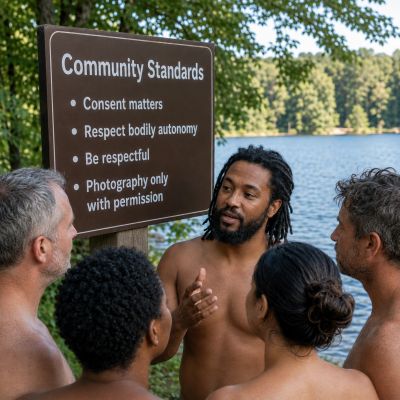
A body-accepting culture should expand choice rather than reverse the direction of coercion. No one should be pressured to remove clothing, display their body, tolerate unwanted touch, accept sexual behavior, remain in a setting that feels unsafe, permit photography or recording, or surrender control of their image.
A person’s discomfort deserves compassion and reasonable accommodation. At the same time, discomfort alone does not automatically establish that another person’s body is immoral, dangerous, or harmful. Personal reactions and public restrictions are related questions, but they are not identical.
The most useful question is not whether anyone feels uncomfortable. It is what boundaries can protect everyone’s autonomy without treating anatomy itself as misconduct.

Children’s Safety Requires Clarity, Not Shame
Children deserve especially strong protection, but protection should not begin from the assumption that a child’s comfort with their own unclothed body is abnormal or adult-driven. Many young children are naturally unconcerned with clothing and may enjoy being free of it until they learn the modesty rules, embarrassment, and social expectations of the culture around them.
The responsibility of adults is not to create shame around that comfort, nor to use body acceptance as a reason to ignore boundaries. Adults must provide age-appropriate privacy, respect a child’s changing preferences, prevent coercion or exploitation, and ensure that no child is pressured either to uncover or to cover through fear, ridicule, or humiliation.
Body acceptance must never be used to excuse inappropriate adult behavior, dismiss a child’s discomfort, weaken safeguarding, or override a child’s wish for privacy. At the same time, ordinary childhood comfort with the body should not itself be treated as evidence of danger. The central concern should be the conduct of adults, the autonomy of the child, and the safety of the environment.
Children should be taught that their bodies belong to them, that anatomical words are not dirty, not jokes, or forbidden, and that they may ask questions without shame. They should know that they may request privacy, refuse touch, change their minds, and report secrets involving bodies or touching to a trusted adult. They should also understand that being unclothed never makes them responsible for another person’s misconduct.
Safety is not created by teaching children that their anatomy is dangerous. It is created through accurate language, bodily autonomy, attentive adults, clear behavioral rules, transparent institutions, and reliable reporting systems.
Normalization of anatomy must never become normalization of boundary violations.

What the Evidence Can and Cannot Tell Us
Research into naturist activity and consensual social nudity has produced encouraging findings. Much more needs to be done. Studies led by psychologist Dr. Keon West have found associations between participation in naturist activities and greater body appreciation, self-esteem, and life satisfaction. Studies of actual naturist events have also reported improvements following participation.
These findings matter because they suggest that encountering a wider range of ordinary bodies in respectful, nonsexual settings may help some people become less judgmental toward their own bodies and less dependent on narrow appearance ideals.
The research remains limited, however. It does not prove that social nudity is right for everyone, establish the ideal amount of nudity for an entire society, or answer every question about culture, trauma, childhood development, privacy, public policy, or long-term social outcomes.
Reclaim Body Comfort therefore distinguishes among different levels of evidence. Some conclusions are well established, including the fact that cultural rules about bodies and modesty vary and that body-image distress can restrict participation and well-being. Other claims are supported but still developing, such as the possibility that consensual experiences of ordinary social nudity can improve body appreciation and psychological well-being for some people.
Still other ideas remain plausible but under researched. Broader acceptance of nonsexual nudity may reduce body shame, improve comfort with anatomical diversity, weaken the reputational weaponization of nude imagery, and help society distinguish bodies from misconduct more accurately.
Finally, some parts of the project are moral positions rather than scientific conclusions. Reclaim Body Comfort holds that ordinary anatomy should not be treated as proof of sexual intent, indecency, danger, or wrongdoing.
The project supports further serious research rather than pretending that every question has already been settled.

Why This Matters in the Digital Age
A camera once captured a moment. Today, an image can be copied, searched, altered, sexualized, attached to a name, and distributed around the world within minutes. Artificial intelligence can manufacture realistic images of events that never occurred.
These technologies create genuine dangers, including nonconsensual photography, hidden recording, facial recognition, deepfakes, identity misuse, sexualized manipulation, harassment, blackmail, reputational attack, and permanent loss of image control.
The answer cannot be to blame the body that was photographed or fabricated. An unwanted image remains a violation even in a body-accepting culture. The wrong lies in the loss of control, deception, targeting, and misuse rather than in the victim’s anatomy.
Reducing body shame may weaken one of the weapons such abuse relies upon: the belief that simply being represented without clothing should destroy a person’s dignity, livelihood, or reputation. That does not reduce the perpetrator’s responsibility. It strengthens our ability to name the actual violation.

Where These Questions Lead
The way a culture understands the body affects far more than private feelings. It shapes how institutions make decisions in technology, healthcare, education, media, recreation, privacy, and public policy.
In artificial intelligence, the question is whether a system can distinguish an ordinary human body from sexual exploitation and whether it can protect against real-person abuse without classifying all anatomy as unsafe.
On social media, the question is whether medical, educational, artistic, documentary, breastfeeding, and nonsexual body-positive content should be treated as equivalent to pornography.
In film and media, the question is why visible anatomy is often restricted more heavily than graphic violence, humiliation, or sexualized imagery that remains technically clothed.
In healthcare, the issue is whether embarrassment, anatomical shame, and fear of examination affect people’s willingness to describe symptoms and seek care.
In education, the question is whether people can learn accurate language for bodies, boundaries, consent, health, and abuse without treating anatomy as forbidden.
In swimming and recreation, the question is whether swimsuits should be compulsory in every shared aquatic environment or whether carefully governed clothing-optional opportunities could exist alongside traditional textile spaces. Dekan Swim explores this question through a developing vision for respectful, clothing-free immersive aquatic art experiences built around consent, privacy, beauty, and bodily dignity.
In privacy and image rights, the challenge is to protect people from photography, recording, synthetic manipulation, and distribution without defining the visible body itself as the injury.
In public policy, the question is whether laws can distinguish deliberate harassment and sexual conduct from harmless anatomy more precisely.
These are not fringe questions. Every human life is lived through a body, and every major institution eventually makes decisions about how that body may be seen, represented, discussed, protected, or controlled.

Begin With a Question
Reclaim Body Comfort does not ask visitors to accept a complete worldview before entering the conversation. It asks them to examine beliefs that often go unexamined.
Why are people uncomfortable with nudity? Is discomfort with the human body natural or learned? Why do people treat genitalia as evidence of sexual meaning? Can privacy exist without shame? Is nudity unsafe, or can nudity exist within safe situations? When does discomfort justify a restriction? What makes an image sexual? Can censorship intended to protect people also cause harm? Does ordinary exposure to diverse bodies improve body acceptance? Why is violence often more acceptable in media than nudity? Should swimsuits be compulsory in every public swimming environment? Can artificial intelligence protect people without treating all nudity as dangerous? What would a culture with less body shame actually look like?
Visitors may agree with some of Reclaim Body Comfort’s conclusions and reject others. The purpose of inquiry is not agreement without examination. It is to ask whether inherited beliefs accurately identify harm or merely repeat rules that have become familiar.

Part of Acceptance by Design
Reclaim Body Comfort is part of the larger work of Acceptance by Design, which begins from the conviction that human worth does not depend on productivity, appearance, conformity, or social approval.
Acceptance by Design examines how dignity and belonging can be intentionally supported through ideas, language, products, environments, policies, and everyday practices. Its central premise is that acceptance cannot be entrusted entirely to chance—especially when shame, prejudice, exclusion, and narrow standards are already being taught and reinforced.
Reclaim Body Comfort applies that philosophy specifically to the unadorned human body. It questions the cultural assumptions that confuse anatomy with sexual intent, indecency, danger, or misconduct.
Dekan Swim carries the inquiry into experiential design. It explores how art, water, architecture, consent practices, privacy protections, and shared expectations could create respectful places where a different relationship with the body can actually be experienced.
Reclaim Body Comfort questions the conditions that produce bodily shame. Dekan Swim designs an alternative. Both are expressions of Acceptance by Design.

A Resource Designed to Be Shared
Reclaim Body Comfort is being developed as a public educational and conversation resource for people who want to examine how culture shapes attitudes toward the human body. Its purpose is not simply to present conclusions, but to provide questions, distinctions, evidence, and practical language that can help people discuss a subject that is often avoided, oversimplified, or treated as settled before it has been carefully examined.
The material can support personal reflection, informal conversations, discussion groups, community forums, classrooms, healthcare education, body-image advocacy, policy discussions, research, social-media conversations, public tabling, and work involving artificial intelligence, privacy, image consent, and digital ethics. It can also help people who disagree with one another identify where their disagreement actually lies. Two people may appear to disagree about nudity when one is concerned about privacy, another about sexual conduct, another about children’s safety, and another about cultural expectations. Clearer distinctions can make those conversations more productive.
Reclaim Body Comfort is intended to be used, adapted, quoted, shared, and discussed. A question from the site might begin a private conversation between friends, become the focus of a community meeting, support a classroom discussion, inform a policy proposal, or help someone explain why anatomy should not automatically be confused with misconduct. The goal is to make difficult conversations easier to begin and more precise once they are underway.
This resource is not designed to pressure people toward a single personal relationship with clothing, modesty, privacy, or nudity. People may reach different conclusions about what feels comfortable or appropriate in their own lives. The aim is not uniformity. It is to help people examine assumptions, separate emotional reactions from evidence of harm, and think more carefully about anatomy, conduct, consent, privacy, shame, safety, and human dignity.
A healthier public conversation does not require everyone to agree. It requires people to ask better questions, use more accurate language, and focus moral judgment where actual harm occurs.

What Reclaim Body Comfort Stands For
Reclaim Body Comfort supports the dignity of every human body, freedom from body shame, freedom to wear clothing, freedom to choose nudity in appropriate settings, meaningful bodily autonomy, strong protection against coercion and exploitation, accurate health and anatomical education, rigorous safeguarding of children, privacy and image consent, protection against deepfakes and nonconsensual imagery, distinctions between anatomy and conduct, evidence proportionate to the claims being made, respectful disagreement, and policies based on actual harm rather than reflexive alarm.
It rejects sexual coercion, harassment, unwanted touching, pressure to uncover, pressure to suppress discomfort, voyeurism, nonconsensual photography, identity misuse, exploitative imagery, sexualized depictions of minors, the use of body acceptance to evade scrutiny, and the treatment of a victim’s anatomy as the source of an image-based violation.
A healthy culture must be capable of holding all of these principles at once.

The Goal
Reclaim Body Comfort seeks a culture that judges conduct accurately, protects autonomy rigorously, and treats the human body with greater acceptance and dignity.
The central question is how much moral meaning an ordinary body should be forced to carry.
A healthier culture would not require everyone to make the same choices about clothing, modesty, privacy, or nudity. It would give people greater freedom to dress, cover, uncover, swim, learn, create, receive care, and inhabit their bodies while maintaining firm boundaries against coercion, exploitation, harassment, unwanted photography, image misuse, and abuse.
Reclaim Body Comfort does not attempt to eliminate privacy or discomfort. It works to prevent anatomy itself from being mistaken for wrongdoing—and to focus protection where actual harm occurs.
-908dc45.jpg/:/rs=w:400,cg:true,m)
